
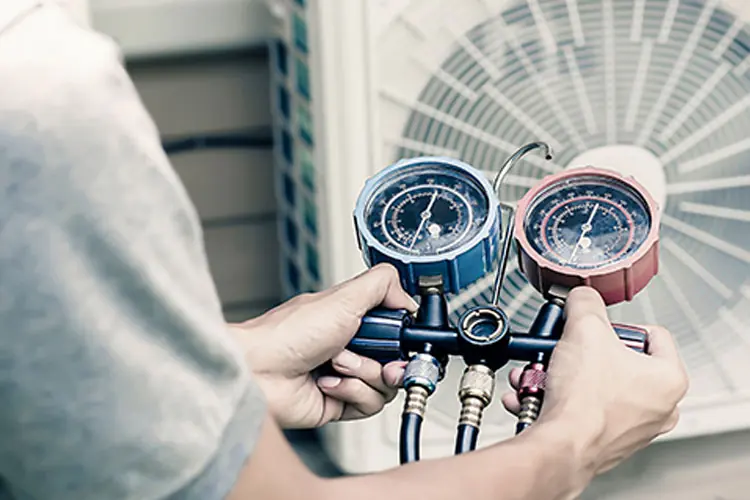
Your air conditioner always makes some noise: the hum of the compressor, the whoosh of the fan, a click when it starts and stops. A new sound is different. It’s often the first warning that a part is wearing out, and catching it early is usually the difference between a small repair and a breakdown on a 110° afternoon. Here’s what each sound tends to mean.
AC noises and what they usually mean
| Sound | Likely cause | How urgent |
|---|---|---|
| Buzzing or humming, outdoor unit won’t start | Failed capacitor, stuck contactor, or a fan or compressor motor that can’t start | Turn it off and call: a motor straining to start overheats fast |
| Clicking over and over | Failing contactor, relay or capacitor; an electrical fault; a thermostat problem | Call soon. One click at start-up and shut-down is normal |
| Screeching or squealing | Worn fan or blower motor bearings, a slipping belt, or very high pressure in the system | Turn it off and call |
| Grinding | Motor bearings that have failed metal-on-metal | Turn it off now and call |
| Banging or clanking | A loose or broken part: fan blade, motor mount, or an internal compressor part | Turn it off now and call |
| Rattling | Loose panel screws, debris in the outdoor unit, or a loose fan blade | Check for debris; call if it continues |
| Hissing or bubbling | A refrigerant leak, or air in the lines | Call: a leak won’t fix itself |
| Gurgling or dripping indoors | A clogged or slow condensate drain | Call before it overflows into the ceiling |
| Loud whistling at vents | Restricted airflow: dirty filter, closed vents or undersized returns | Change the filter first |
Inside your AC’s outdoor unit
Most “AC not cooling” calls trace back to one of these parts. Here’s what each one does, and what goes wrong with it in Las Vegas heat.
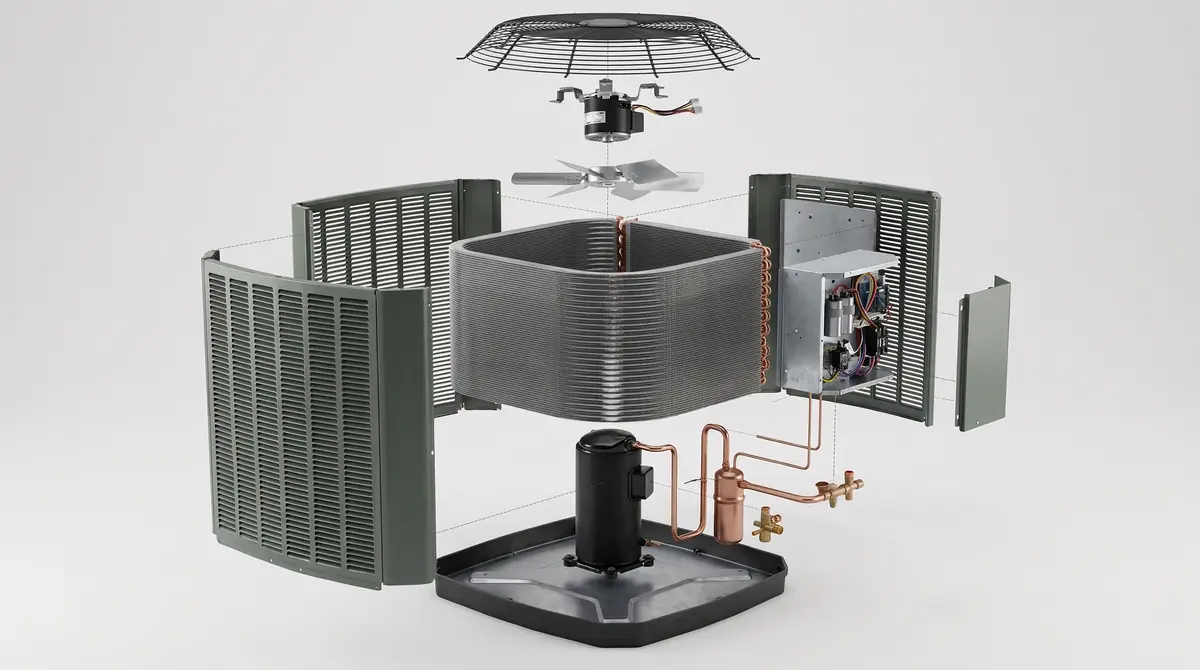
- Fan guard Keeps hands and debris out of the fan. Leaves and cottonwood fluff collect here.
- Fan motor Mounts under the fan guard and spins the blade. When its bearings or capacitor fail, the coil can’t shed heat and pressures soar.
- Condenser fan blade Pulls outdoor air up through the coil. A bent or loose blade wobbles, rattles and stresses the motor.
- Condenser coil Copper tubes and aluminum fins that release your home’s heat outdoors. Desert dust packs it and cuts efficiency.
- Control box: capacitor & contactor The capacitor gives the motors their starting kick; the contactor switches power on. The #1 Las Vegas failure point.
- Compressor The heart of the system: it pumps refrigerant and builds pressure. The most expensive part to replace.
- Refrigerant piping & filter drier Copper lines carry refrigerant; the drier traps moisture and debris. Brazed joints here can leak.
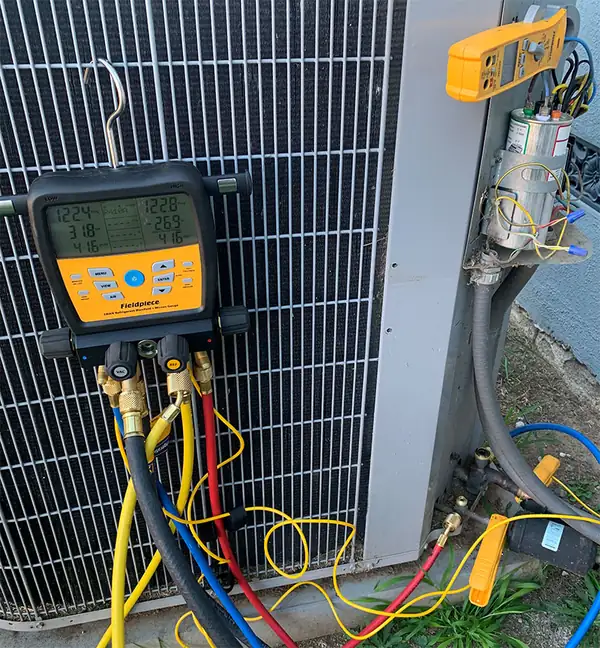
- Service valves Where the line set connects and where technicians attach gauges to read superheat and subcooling.
- Louvered panels & base pan Protect the coil and compressor. Keep at least two feet clear around them for airflow.
Buzzing, humming and clicking: electrical parts
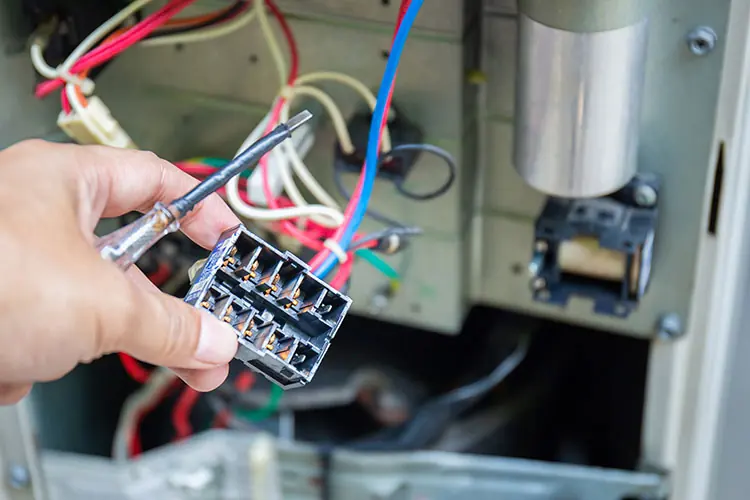
Most start-up noises come from the outdoor unit’s control box. The capacitor gives the compressor and fan motor the kick they need to start; the contactor is the switch that sends them power when the thermostat calls for cooling. Las Vegas heat is hard on both. A weakened capacitor lets the motors hum without turning, and a pitted contactor chatters or sticks. These are common, quick repairs when they’re caught before the motors overheat.
Screeching, grinding and banging: moving parts
Metal sounds mean something is rubbing or loose. Outdoors that’s usually the condenser fan motor or blade; indoors it’s the blower motor or wheel. A worn bearing gets louder over days or weeks before it seizes. A loud bang or clank at start-up, especially from the compressor, needs attention right away: keeping it running can turn a repairable problem into a compressor replacement.
Hissing, bubbling and gurgling: refrigerant and water
A hiss or bubbling sound near the indoor coil or the copper lines can mean a refrigerant leak. Refrigerant isn’t used up, so if the system is low it’s leaking, and topping it up without finding the leak just postpones the next call. Gurgling inside the house is more often the condensate drain: in summer an AC pulls a surprising amount of water out of the air, and a clogged line can back up into the drain pan and ceiling.
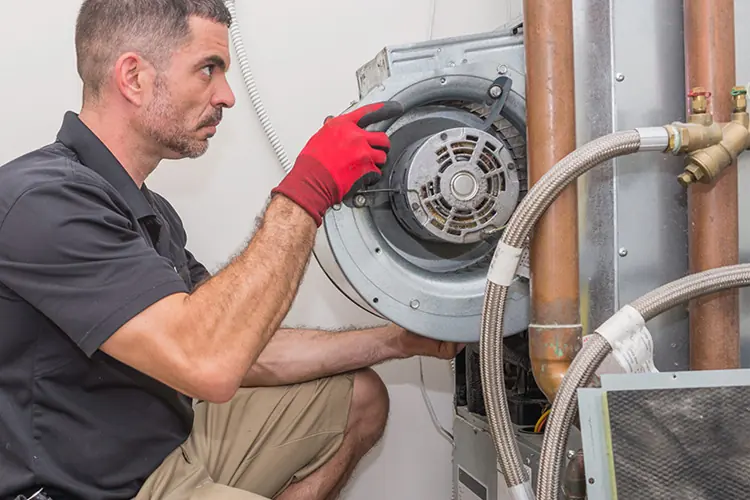
What you can safely check yourself
- Change the air filter if it’s dirty. It fixes most whistling and some humming from a straining blower.
- Look at the outdoor unit from the outside: leaves, plastic bags or windblown debris against the fan guard can rattle and slap.
- Tighten obviously loose panel screws on the outside of the cabinet.
- Make sure vents and returns are open and not blocked by furniture.
- Note when the sound happens: at start-up, all the time, or at shut-down. It helps the technician find it faster.
When to turn the AC off
Shut the system off at the thermostat and call for AC repair if you hear grinding, banging or loud screeching, or a buzz from an outdoor unit that won’t start, or if you smell burning. Those sounds mean a motor or compressor is being damaged with every minute it runs. In the summer heat, that’s what emergency AC repair is for.
Amazing service, very professional and honest technician. Stephen fixed my A/C in 35 minutes, now it’s running like new. I definitely will call them back.
Had an issue with our AC unit, called up this company and Steve came out and quickly diagnosed our unit and got the part replaced the same day! Couldn’t be any happier with the customer service he provided.
Hearing something new? Call Save On at (702) 885-5000 or request AC repair in Las Vegas. Regular AC maintenance catches most of these problems before they get loud.
More AC guides
-
Guide
AC Running but Not Cooling? Causes and Fixes
Five safe checks you can do yourself, the seven usual causes, and when to call for AC repair.
-
Guide
AC Freezing Up? Why It Happens and What to Do
Ice on your AC in the desert? What to do right now, the airflow and refrigerant causes, and prevention.
-
Guide
AC Replacement Cost in Las Vegas
What a new AC costs ($6,500–$12,000), what moves the price up or down, and how to save.
-
Guide
What Size AC Do I Need? A Las Vegas Sizing Guide
Tons, BTU and a rough square-footage chart, plus why the right size beats the biggest one.
-
Guide
Best Thermostat Setting for Summer in Las Vegas
Home, away, asleep and on vacation: settings that keep the family cool and the power bill down.
-
Guide
Repair or Replace Your AC? A Las Vegas Guide
Age, refrigerant, which part failed and a simple rule of thumb to help you decide.
FAQ
AC Noise FAQ
Why is my AC buzzing but not turning on?
Usually a failed capacitor, a stuck contactor, or a fan or compressor motor that can’t start. Turn the system off and call a technician, because a motor straining to start can overheat quickly.
Is it normal for my AC to click?
One click when the system starts and stops is normal. Repeated clicking, or clicking without the unit starting, points to an electrical part or thermostat problem.
Why is my AC making a screeching noise?
Most often worn fan or blower motor bearings. Turn the system off and have it checked before the motor seizes.
What does a hissing sound from my AC mean?
It can be a refrigerant leak. Refrigerant isn’t used up, so a system that’s low has a leak that should be found and repaired.
Should I keep running my AC if it’s making a loud noise?
Not if it’s grinding, banging or screeching, or if you smell burning. Turn it off at the thermostat and call for repair.
Hearing something new? Let’s fix it early.
Nationally certified technicians, upfront pricing and a 10-year parts warranty. Emergency AC repair 24/7.