
Your air conditioner is running, the fan is blowing, but the house keeps getting warmer. In a Las Vegas summer that turns from annoying to unsafe quickly. Here’s what’s usually going on, what you can safely check yourself, and when to call a technician.
Five safe checks before you call
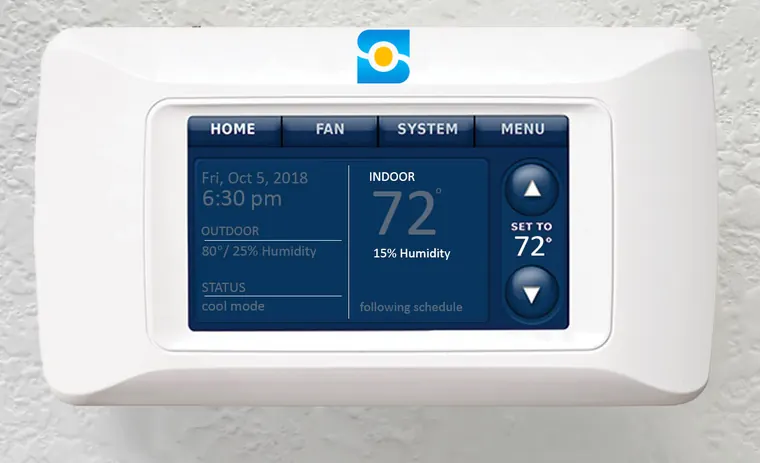
- Thermostat. Set to Cool (not Fan or Heat), a few degrees below room temperature. Replace the batteries if the screen is faint or blank.
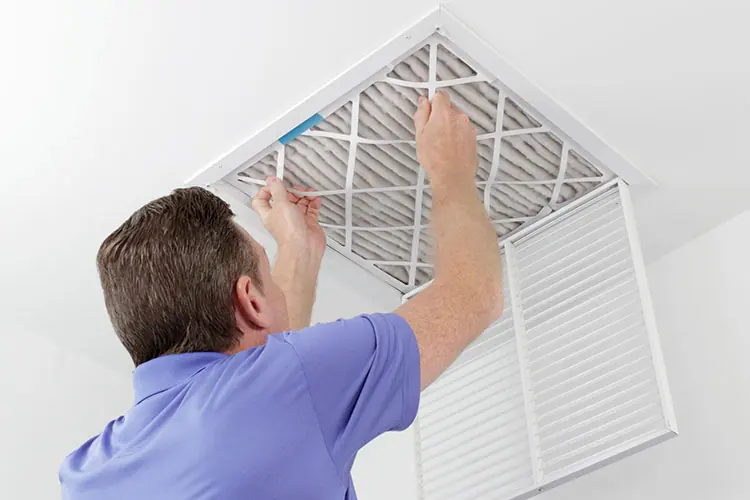
- Filter. Pull it out and hold it up to a light. If you can’t see through it, replace it. A clogged filter is the number-one cause of frozen coils.
- Breakers. Check the AC and air handler breakers in the panel and the disconnect box by the outdoor unit. Reset once only; if it trips again, leave it off.
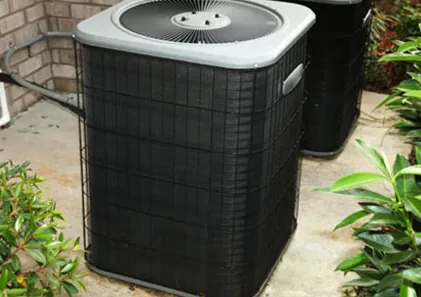
- Outdoor unit. Is the big fan on top spinning? Is the coil caked with dust or blocked by plants, a cover or stored items? Keep about two feet clear around it.
- Vents. Make sure supply vents are open and the return grille isn’t blocked by furniture.
The usual causes
1. A failed capacitor
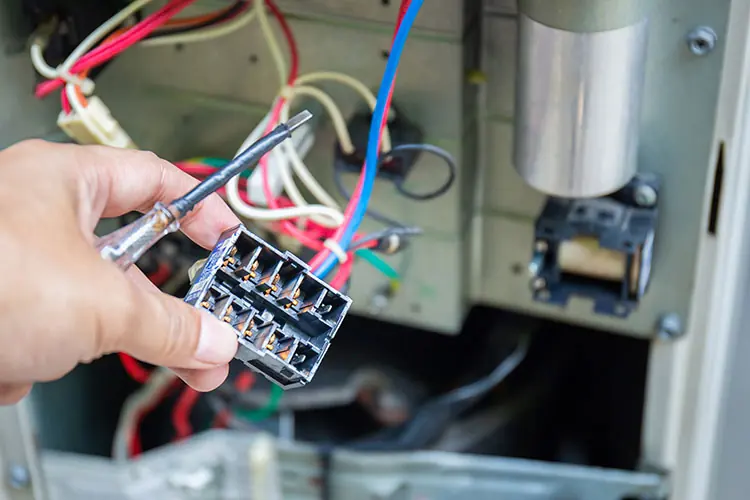
The capacitor gives the compressor and outdoor fan motor the kick they need to start. Months of 100°+ heat wear them out, which makes them the most common AC repair in Las Vegas. Signs: the outdoor unit hums but the fan doesn’t spin, or the fan runs but the air inside isn’t cold. Don’t poke at it: capacitors hold a dangerous charge even with the power off.
2. A pitted contactor
The contactor is the switch that powers the outdoor unit. Its contacts burn and pit over time, and ants and debris can jam it.
3. A frozen evaporator coil
Low airflow (dirty filter, dirty coil, weak blower) or low refrigerant lets the indoor coil drop below freezing and ice over. You may see ice on the larger copper line at the outdoor unit, or water around the indoor unit as it thaws. Turn the system to Off with the fan On to thaw it, and call a technician. See AC freezing up.
4. Low refrigerant from a leak
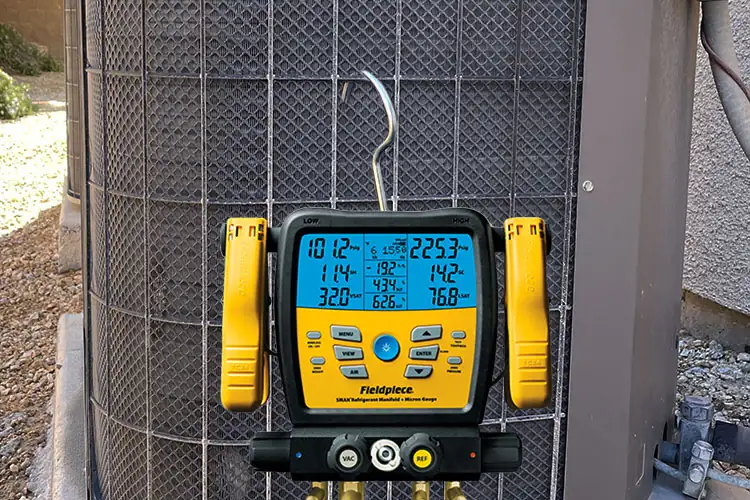
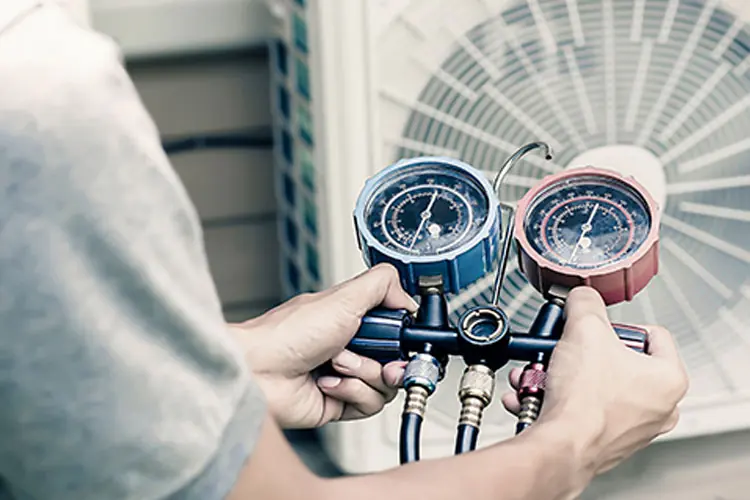
Refrigerant circulates in a sealed loop; it isn’t used up. If the charge is low, there’s a leak. A technician measures superheat and subcooling with gauges to confirm it, then finds and repairs the leak. Topping it off without fixing the leak just means paying again next summer.
5. A dirty condenser coil
Desert dust and cottonwood fluff pack the outdoor coil, so the system can’t reject heat. Head pressure climbs, efficiency drops and the compressor strains.
6. A clogged condensate drain
Many systems have a float switch that shuts the AC off when the drain backs up, to prevent water damage. Cooling stops even though the thermostat looks normal.
7. An undersized or failing system, or leaky ducts
If the system runs all afternoon and only falls behind on the hottest days, it may be undersized, aging, or losing cold air through leaking attic ducts. See duct replacement.
Inside your AC’s outdoor unit
Most “AC not cooling” calls trace back to one of these parts. Here’s what each one does, and what goes wrong with it in Las Vegas heat.
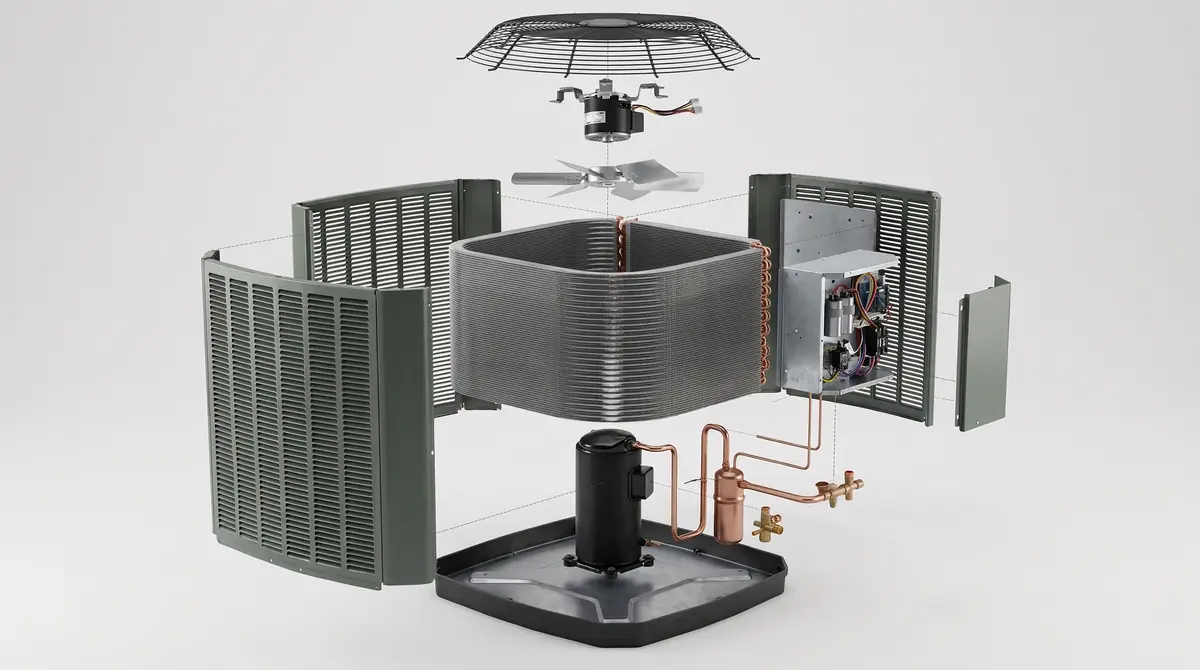
- Fan guard Keeps hands and debris out of the fan. Leaves and cottonwood fluff collect here.
- Fan motor Mounts under the fan guard and spins the blade. When its bearings or capacitor fail, the coil can’t shed heat and pressures soar.
- Condenser fan blade Pulls outdoor air up through the coil. A bent or loose blade wobbles, rattles and stresses the motor.
- Condenser coil Copper tubes and aluminum fins that release your home’s heat outdoors. Desert dust packs it and cuts efficiency.
- Control box: capacitor & contactor The capacitor gives the motors their starting kick; the contactor switches power on. The #1 Las Vegas failure point.
- Compressor The heart of the system: it pumps refrigerant and builds pressure. The most expensive part to replace.
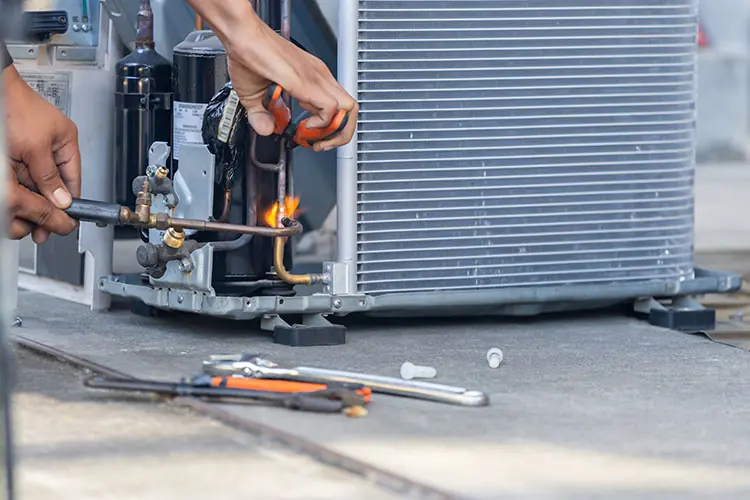
- Refrigerant piping & filter drier Copper lines carry refrigerant; the drier traps moisture and debris. Brazed joints here can leak.
- Service valves Where the line set connects and where technicians attach gauges to read superheat and subcooling.
- Louvered panels & base pan Protect the coil and compressor. Keep at least two feet clear around them for airflow.
What’s normal on a 110° day?
Even a healthy system has limits. Most residential systems are designed to hold an indoor temperature about 20° below the outdoor temperature on the hottest afternoons, and the air coming out of the vents is typically 15–20°F cooler than the air going into the return. If your house drifts up a few degrees in late afternoon and recovers in the evening, that may be normal. If the vent air isn’t cool at all, it isn’t.
When to call right away
- The breaker trips again after one reset
- You see ice on the lines or the indoor unit
- You smell burning or hear grinding, screeching or loud buzzing
- Water is leaking indoors
- Anyone in the home is vulnerable to heat: babies, older adults, someone with a medical condition
Save On offers AC repair in Las Vegas with emergency service 24/7. Call (702) 885-5000.
More AC guides
-
Guide
AC Freezing Up? Why It Happens and What to Do
Ice on your AC in the desert? What to do right now, the airflow and refrigerant causes, and prevention.
-
Guide
AC Replacement Cost in Las Vegas
What a new AC costs ($6,500–$12,000), what moves the price up or down, and how to save.
-
Guide
What Size AC Do I Need? A Las Vegas Sizing Guide
Tons, BTU and a rough square-footage chart, plus why the right size beats the biggest one.
-
Guide
AC Making Strange Noises? What Each Sound Means
Buzzing, clicking, screeching, grinding or hissing: what each sound means and when to turn the AC off.
-
Guide
Best Thermostat Setting for Summer in Las Vegas
Home, away, asleep and on vacation: settings that keep the family cool and the power bill down.
-
Guide
Repair or Replace Your AC? A Las Vegas Guide
Age, refrigerant, which part failed and a simple rule of thumb to help you decide.
FAQ
AC Not Cooling FAQ
Why is my AC running but the house is still hot?
The most common causes are a clogged filter, a failed capacitor, a frozen indoor coil, low refrigerant from a leak or a dirty outdoor coil. Check the filter, thermostat and breakers first.
Should I turn off my AC if it’s not cooling?
If you see ice, smell burning or hear grinding, yes: switch it to Off. To thaw a frozen coil, set the system to Off and the fan to On. Then call a technician.
Can I add refrigerant myself?
No. Handling refrigerant requires EPA certification, and low refrigerant means a leak that needs to be found and repaired.
How cold should the air from my vents be?
Typically 15–20°F colder than the air entering the return grille, once the system has been running for a while.
Still not cooling? We’ll find out why.
Nationally certified technicians, upfront pricing and a 10-year parts warranty. Emergency AC repair 24/7.